
I-care Group Acquires Amiral Technologies’ Assets, Expanding AI-Driven Predictive Maintenance in Nuclear, Defense and Beyond

The asset acquisition brings Amiral’s DiagFit technology into I-care’s solution portfolio, adding on-premises predictive maintenance capabilities and further strengthening I-care’s advanced data analysis capabilities.
Tracks and Overhead Lines: Predicting Degradation Kilometre by Kilometre

Predictive maintenance is often presented through the lens of rolling stock: monitoring a motor, a compressor, a door. The object is identifiable, localised, and sensor data ties back to a specific piece of equipment. But a railway network is not just trains. It rests on hundreds, even thousands, of kilometres of linear infrastructure: tracks, overhead […]
Predictive maintenance without waiting for the first failure

“We don’t have enough failure data to train a model.” Any maintenance manager or data scientist who has attempted to deploy predictive maintenance in industry has heard or said this at some point. In rail, it often sounds like a final verdict. Yet it is based on an assumption that needs to be challenged: the […]
Rail predictive maintenance: why traditional approaches no longer suffice

In rail transport, a train door opens and closes hundreds of times a day. A track section withstands thousands of train passes every month. An overhead line continuously powers trains running at 300 km/h. At this scale, any unanticipated failure leads to delays, costly downtime, and sometimes safety risks for passengers. According to Fortune Business […]
Assystem and Amiral Technologies combine expertise to support predictive maintenance in complex industrial environments

Assystem and Amiral Technologies announce a Memorandum of Understanding to explore joint opportunities in predictive maintenance for complex industrial and energy infrastructures.
Predictive Maintenance in Defence: Why Most Projects Fail to Move Beyond the POC

Predictive maintenance has become a strategic priority for Defence stakeholders. Behind the term lies a strong promise: improving operational availability, reducing unexpected failures and securing critical systems. Radars, sonars, propulsion systems, embedded electronics, sensitive sensors. These assets operate in extreme environments and must deliver reliable performance over life cycles that often exceed twenty or thirty […]
Defense Contractors: How AI Enhances Reliability and Maintenance
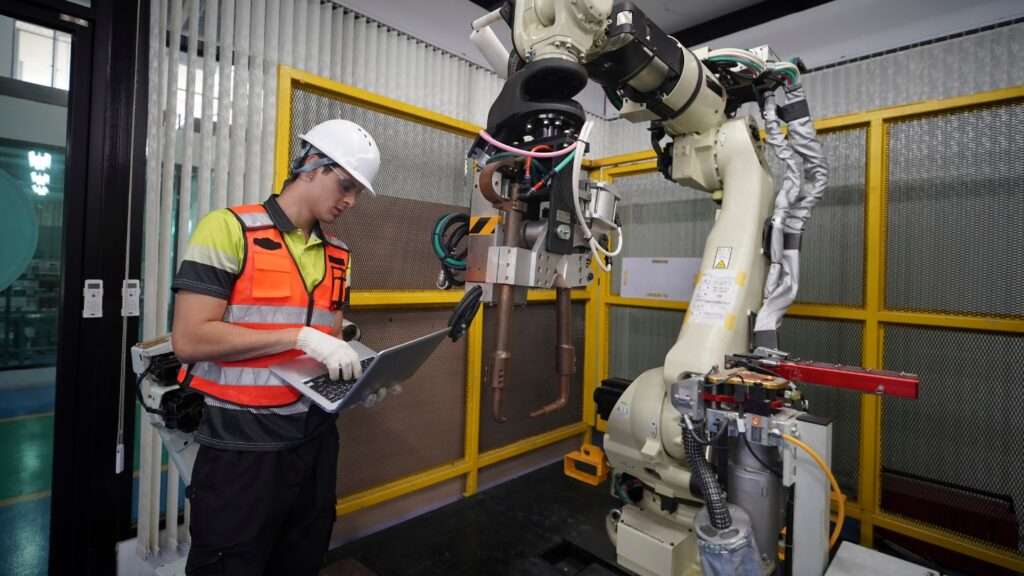
In the defense sector, reliability is far more than a performance metric. It directly determines operational readiness, personnel safety, and the credibility of deployed capabilities. For contractors and OEMs, every system delivered represents a long-term commitment, often spanning decades, and operating in some of the most demanding environments imaginable. Radars, sonars, propulsion systems, embedded electronics, […]
Which drilling equipment should you prioritise for a first predictive maintenance project?

Predictive maintenance is now widely recognised as a key lever for improving the reliability, availability and safety of drilling operations. Yet many projects struggle to move beyond the pilot phase or fail to deliver tangible operational impact. The root cause is rarely technological. More often, it lies in an initial scoping error: trying to predict […]
Amiral Technologies Announces the Release of DiagFit 4.0, a New Milestone in Industrial Anomaly Detection and Diagnosis, Driving Reliability and Operational Performance

Amiral Technologies announces DiagFit 4.0, the latest release of its industrial AI software to enhance anomaly detection, diagnosis and maintenance decision-making.
From sensor to decision: what really happens to data on a drilling rig?

On a modern drilling rig, data is everywhere. Thousands – sometimes hundreds of thousands – of sensors continuously monitor equipment behavior, operating parameters and environmental conditions. Vibrations, pressures, temperatures, torque, electrical signals, flow rates: everything is instrumented, recorded and transmitted. And yet, despite this massive volume of data, many operational decisions are still made reactively, […]
